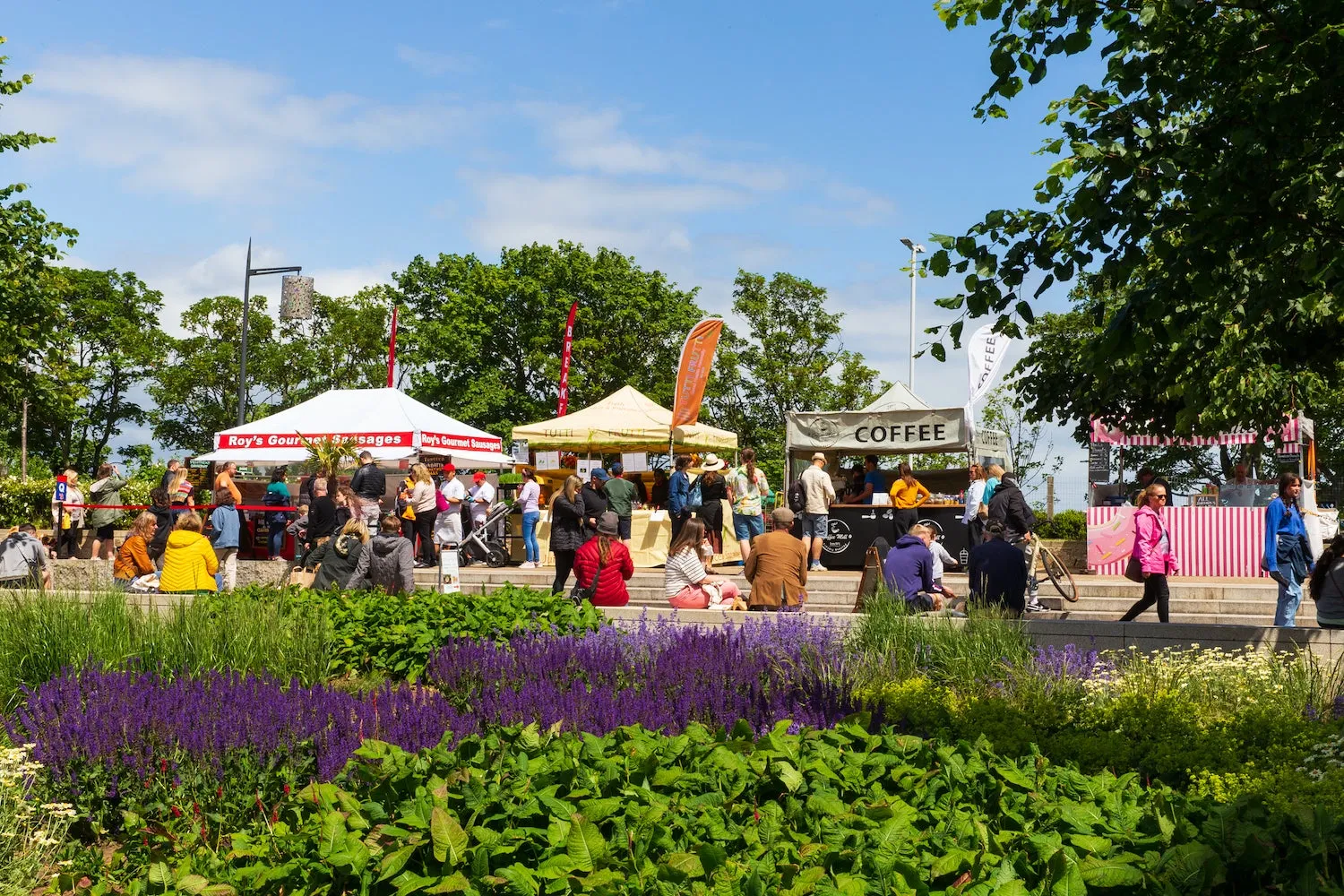
Selling food at a farmers' market in Ireland means operating as a registered food business, meeting Environmental Health Officer (EHO) standards, holding appropriate insurance, and — where applicable — obtaining a casual trading licence before you serve your first customer. This guide walks through what stallholders typically need, based on official Irish guidance. Requirements can vary by local authority and market operator, so always confirm details with your EHO and market organiser.
Choose Your Market and Talk to Traders
Farmers' markets are a popular route for producers, bakers, and small food businesses to sell directly to the public with low overheads and direct customer feedback. Markets operate across Ireland year-round — you can find listings through resources such as Bord Bia's guide to selling through farmers' markets.
Before committing, speak with existing stallholders at the market you have in mind. Traders are usually approachable and can explain booking fees, setup times, power access, what sells well, and any market-specific rules. As Think Business notes, this informal research is one of the most valuable steps you can take before opening for business.
Register as a Food Business with Your EHO
By law, you must notify the HSE before you start operating a food business — including a market stall, mobile unit, or home-based production kitchen. Notification is mandatory under EU food hygiene law and must be done before your first day of trading. You can notify the HSE online through the National Environmental Health Service (NEHS). You will need your business details, premise type (for example a stall or vehicle), and your planned commencement date. After submission, an Environmental Health Officer (EHO) assesses your notification; if accepted, you receive an acknowledgement letter and your business is entered on the food business register.
Your EHO will advise on whether your home kitchen, production unit, or commissary meets the hygiene standards required under EU food law and Irish enforcement practice. Failure to notify the HSE is an offence and may lead to enforcement action.
Market organisers often ask for proof of registration or may contact the EHO directly to confirm you are approved to trade. Guidance for market traders is set out in the FSAI Village Market Handbook and the FSAI Irish Village Markets Traders Handbook.
Insurance You Will Need
Three types of insurance commonly apply to market traders in Ireland:
- Public liability — covers injury to a member of the public interacting with your stall.
- Product liability — covers claims arising from someone consuming your food.
- Employer's liability — required if you employ anyone to work on the stall.
If you apply for a casual trading licence on municipal land, the local authority will typically require a current certificate of public liability insurance, with details matching your application.
Licences and Market Permissions
If the market takes place on municipal land (space managed by a town, city, or county council), you may need a casual trading licence from the local authority. The council will want to see proof of public liability insurance and consistent business details on your application.
If you trade at a privately run event, a casual trading licence is ordinarily not required — but the market operator will still set their own terms, fees, and food-safety expectations. Always confirm licensing requirements in writing before you pay a stall fee.
Stall Setup and Equipment
You will need the practical basics: a sturdy table, scales, bags or packaging, product displays, cleaning materials, and food-safe utensils. Most stallholders use a pop-up gazebo, market canopy, or — for larger operations — a mobile trailer. Your market organiser may specify minimum dimensions, fire safety distances, or whether gazebos must be weighted down.
Plan for hand-washing facilities, waste disposal, and separate storage for raw and ready-to-eat foods. Many markets require traders to bring their own sanitiser, cloths, and a probe thermometer if you sell hot or chilled food. The Bord Bia farmers' market guide covers commercial setup and presentation in more detail.
Food Safety on Market Day
When selling food at a farmers' market, responsibility for food safety sits with you. Your products must be safe, your stall must be hygienic, and your practices must stand up to inspection. The Food Safety Authority of Ireland (FSAI) is the national body overseeing food safety — their advice line is 1890 336677, and they publish practical guides for small food businesses.
Key areas inspectors and customers care about include:
- Temperature control — hot food held at 63°C or above; chilled food kept at 5°C or below; avoid leaving food in the danger zone (5°C–63°C) for extended periods.
- Cross-contamination — separate raw and cooked foods; use dedicated utensils and boards; never place ready-to-eat food where raw juices can drip onto it.
- Personal hygiene — clean hands, protective clothing, hair restraints, and no jewellery that cannot be cleaned.
- Allergens and labelling — declare the 14 major allergens required under EU food information law; label products clearly, especially baked goods and preserves.
- Traceability — keep records of ingredients and batches so you can trace products if a problem arises.
Irish standard I.S. 340:2007 defines temperature and hygiene expectations for food businesses — the same principles apply whether you operate from a restaurant or a market stall.
Training: Why HACCP Level 2 Is Recommended
HACCP Level 1 covers foundation food safety for anyone handling food — hygiene, contamination, temperature control, and safe working practices. For stallholders who prepare, cook, or preserve food, HACCP Level 2 goes further: hazard analysis, critical control points, monitoring, and corrective actions. That deeper knowledge helps you design safer workflows, respond confidently if an EHO asks questions, and scale from occasional markets to regular trading or wholesale.
Formal training is strongly recommended even for small-scale producers. Relying on informal tips alone leaves gaps — especially around allergens, chilling, and documentation. Safe Bites delivers HACCP Level 1 and Level 2 certification through a mobile app created by a Michelin-trained chef. Both levels are included for €39.99, in English, Spanish, Portuguese, and Irish Gaelic, with most learners completing each level in under one hour. You receive a digital certificate you can show market organisers or inspectors.
Before Your First Market Day
- Notified the HSE and received acknowledgement of food business registration
- Public liability (and product liability) insurance in place
- Casual trading licence obtained if trading on municipal land
- Stall structure, tables, scales, and cleaning kit ready
- Temperature monitoring equipment for hot or chilled foods
- Allergen information and product labels prepared
- HACCP training completed and certificate saved or printed
- Confirmed setup time, fees, and rules with the market organiser
Further Reading
Get HACCP certified before your first market
Safe Bites covers HACCP Level 1 & 2 in under an hour per level — multilingual, €39.99 total, built for food businesses across Ireland.
Get the App